


Landing Technique for Performance Maximization and Repetitive Stress Injury Prevention
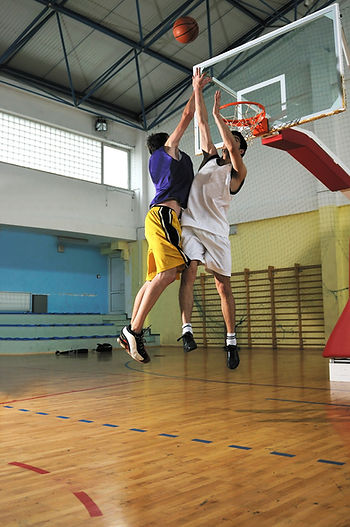
NBA players land incorrectly every time they shoot a jump shot; rarely landing with the correct lower body posture. They land with their legs straight, feet shoulder-width or narrower, and absorb the force of impact by bending their knees. If the knees bend much at all, the heels are pulled off the floor and landing force is concentrated on the balls of the feet. This technique has been used by elite NBA players since the dawn of the NBA. LeBron James lands this way. Kevin Durant, Chris Paul, every NBA superstar lands narrow. Superstars from the past, Micheal Jordan, Larry Bird, all used narrow landing technique so how can it be bad?
How many other disciplines where jumping and landing are essential have been studied? Who needs to land and avoid injury so they can move with maximum performance?
The first individual to introduce me to the fact that there was such a thing as correct landing technique was not any of my coaches it was my first boss. He was a Master Sargent in the army when WWII started. After Pearl Harbor was bombed he joined the Airborne Rangers. When jumping into combat, landing becomes a matter of life and death. Injuring the lower body landing in combat isn’t career threatening; its life threatening. Their landing technique was not performed the way NBA players land. They had to be prepared to land on rough, uneven terrain. To reduce the force of impact and the risk of rolling an ankle (or worse) they landed with the legs wide, with the knees severely bent and feet spread twice shoulder-width. This lower body posture allows all the lower body muscle groups to absorb the landing force and reduces the risk of rolling an ankle when landing on uneven terrain.
Obviously NBA players aren’t jumping out of airplanes at night loaded down with gear into combat. They are however jumping and landing with high numbers of repetitions. It’s not uncommon for "gym rat" players to shoot 500 or more jump shots before or after a practice session. That's 500 bad landings putting unnecessary stress on the feet, calves, and quadriceps. During play it’s not uncommon to jump to execute a jump shot and land on an opponent’s foot (uneven terrain).
The second individual to introduce me to correct landing technique was an Okinawan martial arts instructor demonstrating traditional flying kicks used to kick samurai off horseback. He also landed with legs spread, feet twice shoulder-width, knees bent so the thighs were close, but not quite parallel with the ground. This lower body posture was used to land, not to reduce the stress to the legs, but to be able to move with maximum speed after landing. Landing with the legs narrow impedes the martial artist’s ability to move explosively, to attack or evade an enemy.
NBA players are not required to kick samurai off horseback. They occasionally do need to move with maximum speed after landing. If after shooting a jump shot with a defender jumping to contest the shot the ball hits the rim and bounces directly back to the shooter, the player who can jump first gets the rebound. Landing narrow greatly inhibits jumping ability unless the athlete squats down before jumping which takes time. Landing wide allows the athlete to immediately jump with maximum performance, with no need to squat before jumping. If the ball hits the rim and bounces 6 ft left or right, the player in position to move with the best first step wins in the race to get to the ball. Narrow landing technique inhibits first step performance moving laterally and sprinting forward.
Elite amateur and professional bodybuilders are individuals who have been training for years. They hit plateaus and looking for ways to spur muscle growth, they incorporate “narrow” squats into their lower body training routines. Squatting narrow, with the feet less than shoulder-width apart, concentrates the force of the movement on the quadriceps. Landing narrow is a partial narrow squat. It concentrates the force of landing on the quadriceps. It creates unnecessary stress on the feet when the heels are lifted from the floor.
Do 20 narrow partial squats, feet shoulder-width or less, with just your body weight. Where is the stress felt? You feel it in the quadriceps and calves. If you do enough repetitions, the bottom of the feet start to tingle from the stressing the feet due to pulling the heels off the floor.
Do 20 wide partial squats with the feet spread twice shoulder-width. The stress is felt is the glutes, quads, and hamstrings. The feet stay flat throughout the movement. If you perform this technique comparison in the weight room, use a moderate amount of weight when squatting. The difference in how the legs are stressed is magnified. This is significant because NBA players aren’t doing partial narrow squats every time they land with just their body weight. They possess kinetic energy from jumping. The higher they jump, the more kinetic energy they possess when landing.
What can we take from these various disciplines that relates to landing?
From Industrial Safety Management we know that using large muscle groups instead of small when performing repetitive movements reduces the risk of repetitive stress injuries. When lifting objects from the floor, bending at the waist and lifting with the spinal erectors is bad lifting technique. Keeping the back straight and bending the knees to lift with the leg muscles is correct. It reduces the risk of back injuries and allows the worker to lift more weight. Landing wide uses all the lower body muscle groups. Landing narrow concentrates the force on the quads, and calves, and causes unnecessary stress to the feet by raising the heels during the landing.
With WWII Airborne Ranger landing technique players are less likely to injure the lower body landing wide; both from the force of impact, and from rolling ankles landing on uneven terrain. Landing wide similarly reduces basketball players risk of injury from the repeated stress of 100’s of landings. It also reduces the risk of injury from landing on an opponent’s foot.
Recognizing the reason elite body builders perform narrow squats is further proof that wide landing technique reduces stress to the lower body. It doesn’t focus landing stress on the quads like narrow technique.
These two lower body postures are taught as part of the training in many traditional martial arts. The shizon hontai, or fundamental natural posture, has the student stand with feet shoulder-width apart, with the knees slightly bent. It’s a high posture with a high center of gravity. This is how contemporary NBA players land and frequently play out of, both offensively and defensively. The jigo hontai, or fundamental defensive posture has the student stand with feet spread twice shoulder-width, with the knees bent and the posterior low. This is a lower posture with a lower center of gravity.
The shizon hontai is only taught because it is the body posture you are most likely to be in when attacked by surprise. It is a terrible defensive posture for many reasons. Since NBA players aren’t getting attacked by surprise (usually), there is no reason to assume this posture. Mobility is impaired. You can’t jump as high, move in and out, or side to side as rapidly from the shizon hontai (legs narrow with slight knee bend) as you can from the jigo hontai (legs wide with lots of knee bend).
Training in these postures for 30 years as a martial artist, I can assure you that this is true. But you don’t have to take my word for it. You can test your 1st step performance in the weight room. Put on a lifting belt and tie a loop in each end of a jump rope. Hook one loop through the lifting belt and attach the other to a weight stack attached to a cable pulley system. Adjust the height of the pulley so it is waist high and level with the lifting belt. Move forward to eliminate any slack in the jump rope and measure your first step moving forward from both lower body postures. Do it again moving laterally. The first step from the jigo hontai (wide) is more powerful than the first step from the shizon hontai (narrow) both ways.
There won’t be a 40% reduction in repetitive stress injuries to athletes due to modifying contemporary narrow landing technique alone however it will have an impact. How many times does an NBA or collegiate basketball player land per week, per month or season? That’s probably something that is not being tracked. But reducing the cumulative stress effects of the high volume of repetitive landings will no doubt reduce leg injury rates. Any technique modification that can reduce stress without impairing performance should be adopted. Wide landing technique actually improves immediate first step and jumping performance.


Comments